Ok, not sure if I'm on the right lines here but here goes. I want to sand down some floorboards in my living room and fill the gaps with something. If i remember correctly there is a product (epoxy?) used on boat decks that fulfills my requirements. I seem to remember you force into the gaps and then sand it down when you sand down the rest of the floor.
Am i on the right lines here? Is there such a product?
rgds
Sainty
deck gap filling stuff!!
-
engineerone
- Incredibly Regular Poster
- Posts: 5759
- Joined: Sat Sep 29, 2007 4:46 pm
deck gap filling stuff!!
on wooden boats its a kind of rope, not epoxy.
blimey getting a senior moment, can't remember what it is called ;D
paul
blimey getting a senior moment, can't remember what it is called ;D
paul

deck gap filling stuff!!
Caulking , E1 is right its just string ....... But special marine string ;D you could also use sikaflex but if its for floor boards i would just use mastic as you dont need it to be waterproof .
Lord Nibbo should have a more detailed reply for you ?
Lord Nibbo should have a more detailed reply for you ?
-
lordnibbo
- Occasional Poster
- Posts: 274
- Joined: Sun Oct 14, 2007 10:21 am
- Location: South East Cornwall
- Contact:
deck gap filling stuff!!
jfc wrote:Caulking , E1 is right its just string ....... But special marine string ;D you could also use sikaflex but if its for floor boards i would just use mastic as you dont need it to be waterproof .
Lord Nibbo should have a more detailed reply for you ?
I only ever used sikaflex 290, it's certainly not what I would use to fill gaps in floor boards. I mean it may look nice on a boat deck but no way would I want to see it in my house.
There must be dozens of different Sikaflex's perhaps looking here and exploring what might do would help decide.
I buy quite a lot of stuff from this company and never had a problem with them
http://marinestore.co.uk/Merchant2/merch....e=sikaflex-sika
or this page my give you alternatives to sikaflex
http://marinestore.co.uk/page/mrst/CTGY/adhesives-glues-and-epoxy/
My Flickr Pics & My Blog
deck gap filling stuff!!
LN
sikaflex 290 looks like what I am after but your comments have worried me. Why wouldn't you have it in your house? Is it an appearance thing or does it not finish very well? I plan to finish with this on top which I have used and is an excellent product.
rgds
Sainty
sikaflex 290 looks like what I am after but your comments have worried me. Why wouldn't you have it in your house? Is it an appearance thing or does it not finish very well? I plan to finish with this on top which I have used and is an excellent product.
rgds
Sainty
-
andrewking
- Subscriber
- Posts: 515
- Joined: Tue Oct 16, 2007 3:56 pm
- Location: North Somerset
- Contact:
deck gap filling stuff!!
A problem you may have, depending on the width of the gaps, is getting any sealant to stay put. If it's particularly runny it will drop through any gaps and sit under the floor...
On wooden boats the planks are bevelled to allow a close fit on the framework, with the caulking over the top filling the bevels.
If you go down the 'string'route, the same applies, the 'string', better known as oakum or hemp comes in bales and is teased out into long skiens to remove any bits of twig and other stuff.
It is banged into the seams with caulking irons, and is overlapped as it is done, packing tightly into the seams to force it right back into the planks. If the bevel wasn't there, the hemp would simply bang straight out the back of the boards.
On the carvel planking the seams are then payed in with linseed oil putty (last time I did it, it was mixed with white lead, but I doubt if that's allowed any more!)
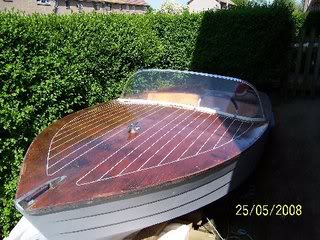
On deck seams, where you want the black lines as seen on teak decks where the Sikaflex caulking is often used, the traditional method is the caulking in with hemp and then fill over the top with molten pitch (tar) and scrape and sand back to leave the black seams.
If it was me, and I've done this a few times, i'd lift the boards and re-lay them, closing the gaps. You'll obviously end up with a big gap at the end, but I then nick a board from a room that won't be on show and use that as it will be a good match to the floor, replacing the 'stolen' board with a new one.
If you buy a new board to put in with an old floor, it will stand out like a sore thumb.
This also allows you to repair any areas where the plumbers and sparkys have buchered it ::)
cheers,
Andy
On wooden boats the planks are bevelled to allow a close fit on the framework, with the caulking over the top filling the bevels.
If you go down the 'string'route, the same applies, the 'string', better known as oakum or hemp comes in bales and is teased out into long skiens to remove any bits of twig and other stuff.
It is banged into the seams with caulking irons, and is overlapped as it is done, packing tightly into the seams to force it right back into the planks. If the bevel wasn't there, the hemp would simply bang straight out the back of the boards.
On the carvel planking the seams are then payed in with linseed oil putty (last time I did it, it was mixed with white lead, but I doubt if that's allowed any more!)
On deck seams, where you want the black lines as seen on teak decks where the Sikaflex caulking is often used, the traditional method is the caulking in with hemp and then fill over the top with molten pitch (tar) and scrape and sand back to leave the black seams.
If it was me, and I've done this a few times, i'd lift the boards and re-lay them, closing the gaps. You'll obviously end up with a big gap at the end, but I then nick a board from a room that won't be on show and use that as it will be a good match to the floor, replacing the 'stolen' board with a new one.
If you buy a new board to put in with an old floor, it will stand out like a sore thumb.
This also allows you to repair any areas where the plumbers and sparkys have buchered it ::)
cheers,
Andy
deck gap filling stuff!!
Ok heres the thing, I want to see the black lines. Ive seen it done before and it looked fantastic, a bit of a change from the usual stripped floorboards.
so i guess i wil give the sika flex a go unless anyone else can suggest an alternative
rgds
sainty
so i guess i wil give the sika flex a go unless anyone else can suggest an alternative
rgds
sainty
-
lordnibbo
- Occasional Poster
- Posts: 274
- Joined: Sun Oct 14, 2007 10:21 am
- Location: South East Cornwall
- Contact:
deck gap filling stuff!!
sainty wrote:Ok heres the thing, I want to see the black lines. Ive seen it done before and it looked fantastic, a bit of a change from the usual stripped floorboards.
so i guess i wil give the sika flex a go unless anyone else can suggest an alternative
rgds
sainty
What Andy says says it all.
So you want to see black lines
 as Andy has said you will need to block off the bottoms of the gaps to stop it dripping though or slumping.
Next thing you have to do is mask off both sides of the gap with masking tape, I'm not talking 1/2" or even 1" tape but your going to need at least 2" tape or in short a bloody lorry load. :-/ it's bloody awful dirty stuff to use it gets everywhere believe me, and you'll still need to sand it off after it's hardened. Now if your still keen to use it there are plenty of web sites showing how to do it. Now I've never seen any decks that have been varnished (They do do it in the USA) how sikaflex will react to varnish I do not know.
My Flickr Pics & My Blog
deck gap filling stuff!!
I dont think that this can be the product that I have seen!!
You are going to have to trust me on this one LN, the black lines are going to look fantastic!!
rgds
Sainty
You are going to have to trust me on this one LN, the black lines are going to look fantastic!!
rgds
Sainty
deck gap filling stuff!!
This is a popular thing to do over here in Scandinavia; its called a "ships floor"
Recommended sealants are either the marine versions (such as already mentioned) or Casco S40 or Bostik 2640.
It is applied along the lines of what LN suggested - masking tape down the edges, fill the gap with sealer, let it dry, then sand the whole floor.
The main differences here are that you can buy ready made flooring with the rubber strip already attached, or if you buy plain floorboards for this purpose, the top side of the tongue is deeper than the bottom side which effectively creates an 8mm wide gap for the black sealer once the floor is laid (in addition to the standard T&G;).
It is also recommended to use "slip tape" to line the bottom of this groove before filling it with sealer as it helps the floor move without cracks appearing in the sealer. It is also suggested that the sealer is at least 5mm deep.
hope this helps
Mike
Recommended sealants are either the marine versions (such as already mentioned) or Casco S40 or Bostik 2640.
It is applied along the lines of what LN suggested - masking tape down the edges, fill the gap with sealer, let it dry, then sand the whole floor.
The main differences here are that you can buy ready made flooring with the rubber strip already attached, or if you buy plain floorboards for this purpose, the top side of the tongue is deeper than the bottom side which effectively creates an 8mm wide gap for the black sealer once the floor is laid (in addition to the standard T&G;).
It is also recommended to use "slip tape" to line the bottom of this groove before filling it with sealer as it helps the floor move without cracks appearing in the sealer. It is also suggested that the sealer is at least 5mm deep.
hope this helps
Mike
deck gap filling stuff!!
Why not route out the lines and drop a bit of timber into that .
Who is online
Users browsing this forum: No registered users and 2 guests