Stop Waiting for Perfect: The Case for a Deliberately Rough Shelf
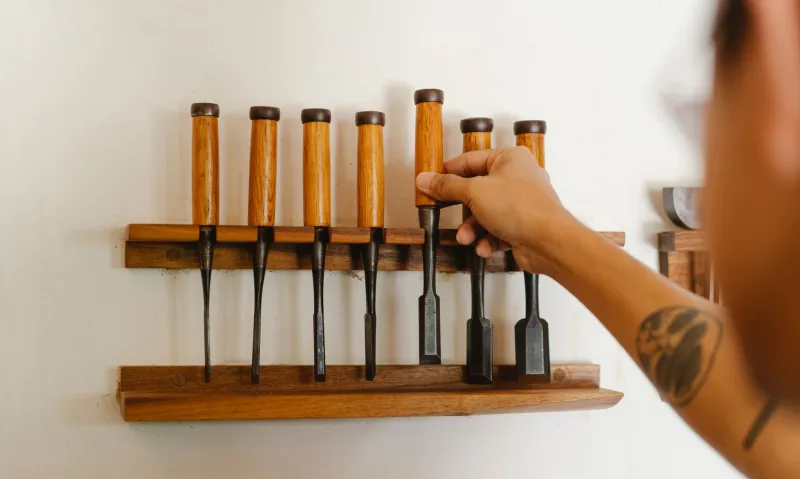
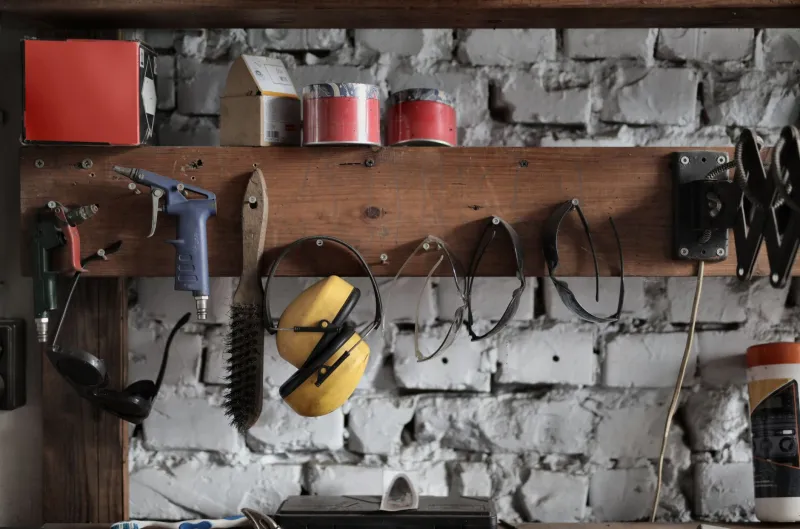
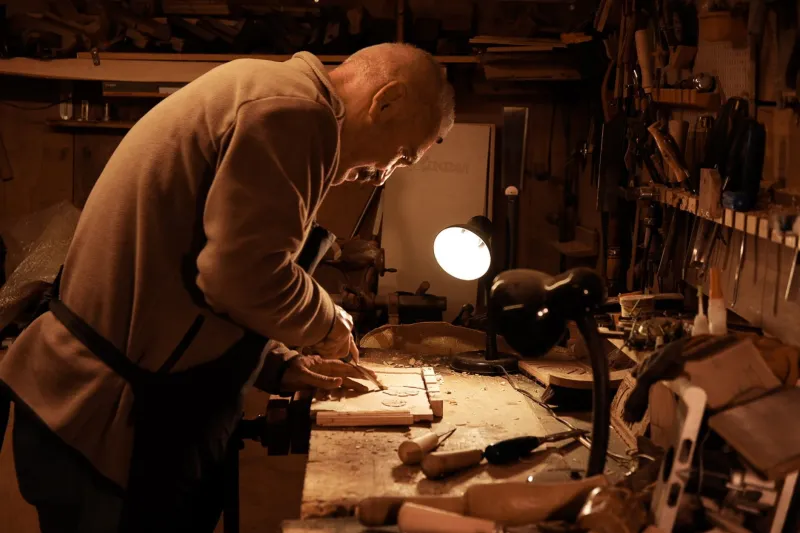
There's a half-finished oak blanket box in my workshop that has been three winters in the making. The dovetails are decent. The lid is glued up. It has no bottom, no hinges and, at this rate, no future. Meanwhile, the shelf above my bench — knocked together in about an hour from a leftover sheet of 18mm ply and four galvanised brackets — has been holding chisels, jars and a very old tin of wax since 2021 without complaint.
I know which of those two builds taught me more.
The project that never ends
We don't talk much about abandoned builds in this hobby. We talk about dovetails, sharpening angles and which brand of block plane is worth the money. But most of us have a version of the blanket box: something that started as a proper project and slowly became a reproach. It sits under the bench, gathering a fine coat of MDF dust, and every time you go in there it whispers you didn't finish me.
That's not a woodworking problem. It's a perfectionism problem. And in a UK shed, with four hours of usable daylight in December and a fan heater that only warms the bit of you facing it, perfectionism is expensive.
Small, dull, done
Here's the argument: a shelf is not a lesser project. It's a different kind of project, and it does a job that a blanket box can't. It gives you the one thing that hobby woodworking actually runs on — a finished thing.
Think about what happens when you finish something, even something trivial. You tidy up differently. You start noticing what your tools can do. You learn where your bench is too low, where the light is wrong, where you keep putting things down and losing them. None of that information arrives while you're still sketching. It only turns up once the shelf is on the wall and you're standing back looking at it.
A rough, honest, slightly-out-of-square shelf is a rehearsal. It's a way of practising the whole arc of a project — measuring, cutting, assembling, fixing, finishing, clearing up — without the pressure of it being the project.
What "good enough" actually means
It doesn't mean sloppy. There's a difference between a shelf that's deliberately utilitarian and one that's badly made. Good enough still means:
- It's square enough to sit flat. Check diagonals, don't agonise over them.
- It's fixed properly. Find the studs, or use decent plasterboard fixings rated well above what you're loading.
- It's finished on the faces you'll touch. A coat of paint or hard wax oil stops it feeling like raw site timber.
- It doesn't wobble. Nothing erodes confidence like a wobbly shelf.
Everything else — the visible end grain, the slightly proud bracket screws, the fact that the two uprights are 3mm different in length — is character. Or at least, it's not worth another weekend.
Finishing when time, space and money are tight
A few rules I've learned the hard way, mostly by ignoring them.
One sheet, one job. Buy a single sheet of 18mm ply or a couple of metres of redwood and decide what it's for before you get it home. Multi-purpose timber piles become storage problems.
Buy the finish before you start. How many projects stall at the finishing stage because the tin ran out? Add the paint, wax or oil to the shopping list at the same time as the screws.
Write the cut list and then don't redesign it. The mid-build tweak is where a two-hour shelf becomes a three-week saga. Make the tweak next time.
Paint is a plan. If the joinery is a bit rough, a coat of eggshell in a colour you like will hide a multitude of sins and make the thing look intentional. Nobody inspects your shelf with a square.
Stop at ninety per cent — on purpose. Give yourself a hard stop. When the shelf is up and doing its job, the project is finished. The sanding you were about to do for another forty minutes is not part of the brief.
Three builds that earn their keep
If you want somewhere to start, these are the ones I recommend to anyone who's stalled.
- A wall shelf on brackets. Two brackets, one board, four fixings. Two hours including tidying up.
- A plywood crate. Offcuts, glue and brads. Useful immediately, and it teaches you about assembly order because you have to glue up fast.
- A three-legged stool. Slightly harder, but it's the best lesson in angles and in accepting that the first one is a learning stool. Splay the legs, don't overthink the seat profile.
Get it on the wall
The blanket box will get finished one day. Probably. But in the meantime, the shelf is holding my chisels, and the workshop works better because of it.
If you've been circling the same project since last spring, put it to one side for a fortnight and build something you can finish in a single evening. Rough edges, cheap timber, one coat of paint. Then stand back and look at it and notice that you made a thing, and it's doing a job, and the world has not ended over the screw heads being on show.
That's not lowering your standards. That's building the habit that eventually lets you meet them.